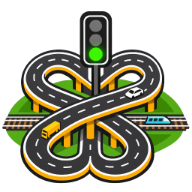
Traffic Architect How to Reduce Traffic With Smarter Roads and Transit
Traffic Architect how to reduce traffic: use interchanges, signals, one-way streets, bus lanes, rail, and metro to cut jams and keep your city moving.
Learning Traffic Architect how to reduce traffic is mostly a matter of finding the bottleneck before you pour more asphalt. Traffic Architect simulates a self-growing city where every new building adds trips, so congestion is feedback: too many vehicles are sharing a turning movement, a junction, or a route. The strongest Traffic Architect how to reduce traffic workflow is diagnostic—read the heat map, trace a car, check the live metrics, then make the smallest change that addresses the cause.
As of November 7, 2026, the Steam store listing for Traffic Architect recorded a release date of November 3, 2026, Green Signal Games as developer and publisher, a Mostly Positive rating with 79% of 98 user reviews positive, and an introductory price of $8.99, a 10% discount from $9.99; the page listed the offer as ending November 10. Treat those figures as a launch-window snapshot and check the store page for updated numbers.
Diagnose the Network Before You Fix It
Before changing a road, identify where the network hurts. The congestion heat map highlights trouble spots, and the game's live metrics track more than two dozen measures, including queued cars and transit share. Because every vehicle is simulated, you can follow one car across town and see whether its delay comes from a long queue, a slow junction, or a detour that is twice the direct distance.
Use short investigation passes:
- Follow a problem vehicle and note the first point where it slows.
- Compare queued cars with transit share; a single bad approach is a different problem from a corridor with no alternative.
- Check the junction before widening the whole road; a turning conflict can survive extra lanes.
- Recheck the chart after each fix so you know which change helped.
A useful Traffic Architect how to reduce traffic habit is to record the before-and-after. The store page says each metric is charted across the whole run, so you can see what a new interchange did to the numbers. If the queue falls but transit share stays flat, you may have solved a local conflict without giving people another way to travel.
Road Fixes: Traffic Architect How to Reduce Traffic
Roads are the first lever, but they are not one lever. Traffic Architect supports 11 road tiers, from gravel tracks to boulevards and multi-lane highways, plus bridges and tunnels. The important choice is matching capacity to demand instead of building the biggest road everywhere.
Interchanges are a headline fix. The store page says a jammed crossing can be rebuilt as a full interchange in one click: a compact three-way or trumpet where three roads meet, or a compact or wide cloverleaf where two roads cross. That option is useful when the problem is conflicting movements rather than raw lane count.
At the junction level, you can use one-way streets, turn restrictions, and per-junction rules, then tune traffic lights phase by phase. In player experience from a first-look video, the creator used single-lane one-way streets to form a tighter roundabout and later explored turn lanes and lane connectors. Those tools are best introduced after you have watched actual traffic, because restrictions that look efficient on paper can strand a turning movement.
| Symptom | Useful fix | Why it can help |
|---|---|---|
| Queue where three roads meet | Compact three-way or trumpet interchange | Rebuilds the junction as an interchange matched to a three-way meeting |
| Two busy roads crossing | Compact or wide cloverleaf | Rebuilds the crossing as an interchange instead of a direct junction |
| Buses stuck in car queues | Bus lanes or bus-only roads | The store page says these keep buses out of jams |
| Freight adding to road load | Dedicated rail freight | Moves goods off the road network |
First-look player experience is not a strategy guide, but it shows how quickly a layout can become a puzzle. The creator kept returning to one congested roundabout, widening a connecting road, and adding local bus service rather than rebuilding the entire map. That pattern fits the game's design: find the pressure point, make a targeted change, then watch the next wave of growth.
Transit Upgrades: Traffic Architect How to Reduce Traffic
A road-only plan eventually hits a ceiling. Traffic Architect's transit layer includes bus lines with routes and stops, bus lanes and bus-only roads, passenger rail, and underground metro with stations, level crossings, and tunnels. Passengers can route across the whole network, including transfers, so a bus feeder into a rail station can be part of the same trip.
Freight rail matters too. The store page says dedicated lines connect industry to demand and take trucks off the roads, with goods changing trains at shared stations the same way passengers transfer. If a corridor is crowded with delivery traffic, rail may do more than another lane.
Place transit where people already travel. The store page notes that a bus line, rail link, or metro tunnel placed on an existing travel corridor fills up fast, and every rider is one less car in the junction. Watch transit share after opening a line; if it rises while queued cars fall, the investment is doing the job you wanted.
Traffic Architect how to reduce traffic cannot rely on cars alone once the city gets dense. A frequent bus line on a crowded corridor, a metro tunnel under a difficult junction, or a freight rail link that removes trucks can all reduce the number of vehicles competing for the same asphalt.
Budget Habits for Traffic Architect How to Reduce Traffic
Traffic Architect can punish overbuilding. In the first-look player experience, the creator warned that roads cost money, income arrives only as trips are made, and a new settlement can demand a connection on short notice. The run nearly ended when an unconnected town timer expired; the player described game over as arriving very fast.
Safe habits:
- Build a smaller road first, then upgrade as demand appears.
- Keep a cash reserve for surprise connections.
- Avoid expanding every corridor at once; use the heat map to prioritize.
- Use Shift-click segment removal, shown in the first-look video, to retrofit a layout without tearing down an entire road.
- Practice in Creative mode or Traffic Challenges if you want to learn interchanges without budget pressure.
The best Traffic Architect how to reduce traffic habit may be restraint: fix the bottleneck you can measure, then wait for the next trip data before spending again. The city grows on its own, and every new building adds fresh trips, so a layout that works at one population level can fail at the next. Leave room for an upgrade before you need it.
FAQ
What is the fastest first step for Traffic Architect how to reduce traffic? Start with diagnosis. Open the congestion heat map, follow a delayed vehicle, and check the live metrics for queued cars and transit share. Fix the junction or corridor with the clearest cause before widening an entire road.
Do more lanes always reduce traffic in Traffic Architect? No. Adding capacity can help, but the store page presents interchanges, signal timing, one-way streets, turn restrictions, and transit as separate tools. If cars are waiting on a conflicting turn, extra lanes may not address the cause.
When should I add buses, rail, or metro? Add transit when a corridor stays busy and the route already has demand. The store page says transit placed where people already travel fills up fast, and every rider is one less car in the junction. Bus lanes and bus-only roads can protect service from general traffic.
Is Traffic Architect hard to manage? It can be, especially during a growth spurt. In player experience from a first-look video, the creator found the game easy to lose by overbuilding or missing a new connection. Use Creative mode or Traffic Challenges to practice without budget pressure, then return to a normal run with a simpler layout.
Related Guides
Traffic Architect Car Simulation Review: Lane Rules, Bridges, and Budget
A Traffic Architect car simulation review covering lane connectors, bridge building, road rules, level pacing, and dated Steam review data.
Traffic Architect Congestion Heat Map: Reading Your City's Pain Points
Learn how the Traffic Architect congestion heat map exposes bottlenecks, and which fixes—lanes, signals, interchanges, transit—clear them.
Traffic Architect Detours: How Routing, Road Rules, and Turn Bans Shape Traffic
Learn how Traffic Architect detours work: routing costs, turn bans, one-way rules, and district restrictions that send cars the long way.
Traffic Architect How to Fix Overloaded Buildings: Routing and Lane Fixes
Overloaded buildings in Traffic Architect usually mean a broken route, not a broken building. Here's how to audit turn bans, lanes, and junctions.